
We often get calls from people who did all the right things to get rid of the moths in their homes: they’ve cleaned the house, discarded infested items, placed traps, but to no avail – the moths just kept reappearing, damaging food and clothes. Unfortunately, without proper treatment, this cycle can go on for months. By the time they contact us, many of our clients are at their wits’ end about how to handle the issue.
The only way to get rid of moths and prevent reinfestations is to find out why they keep showing up. That is why, today, we are sharing the most common (as well as some uncommon) reasons why moths keep appearing in the house. We have also included a few practical tips to help you maintain a moth-free home.
Can Moths Come From the Wild?
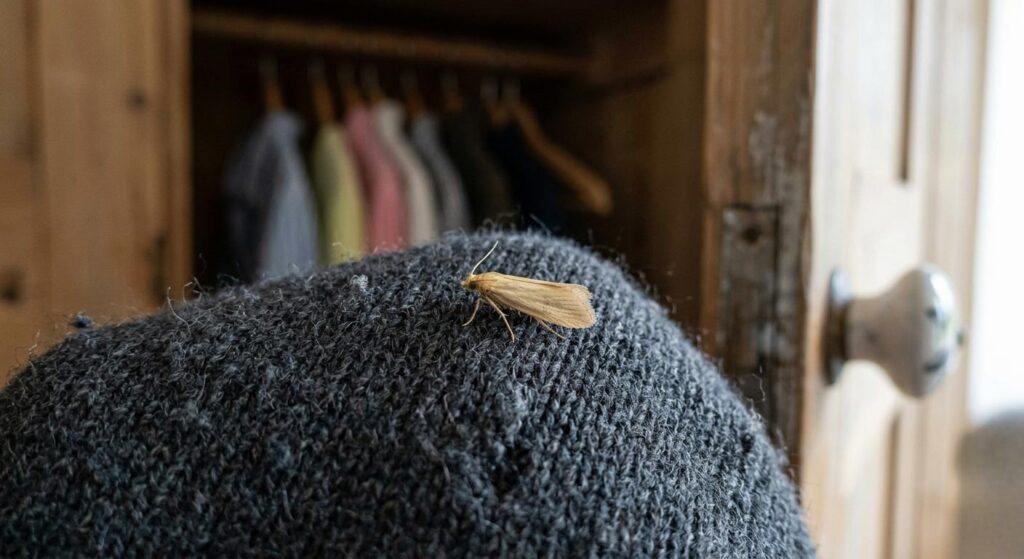
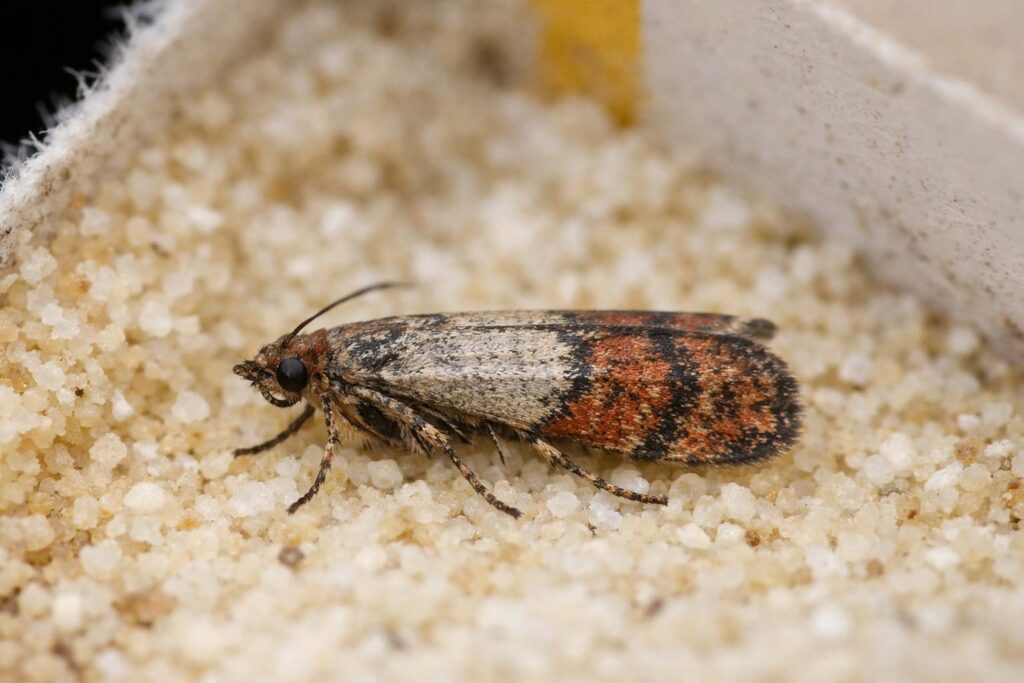
The two main types of moths that infest London homes are the pantry moths and the clothes moths. These moths originate from 2 different moth families. The pantry moth, also known as the Indianmeal moth, belongs to the Pyralidae family. We use the common name Clothes Moths to refer to 3 different species from the Tineidae family that chew through our textiles – the Common Clothes Moth, the Casemaking Clothes Moth, and the Carpet Moth.
Many people think that pestilent moths can come inside the house from the wild; however, this is almost never true. While both pantry moths and clothes moths can still be found to some extent in their natural habitats, they are all synanthropic species thriving on the resources and shelter provided by humans. In other words, the abundance of food and the warmth of our homes have turned these insects into primarily indoor pests. It is very unlikely for an infestation (or reinfestation, for that matter) to start from moths coming from outdoors.
Why Do Moths Keep Reappearing
There are a few reasons moths keep reappearing in your home even after cleaning and treatment. Reinfestations usually occur if you fail to find all feeding sources and hidden eggs, or if treatment is incomplete.
Missed Food Sources
Our homes provide a wealth of food for moths to feast on – clothes, carpets, grains, and seeds. So naturally, when these pests appear, most people do the right thing and clean out all pantries, wardrobes, cupboards and storage rooms around the house. However, moths are resilient creatures and may not rely only on the most obvious food sources. Clothes moths don’t stick to eating just your jumpers – they eat wool furniture, carpets, tapestry, even soft leather items like shoes and jackets, especially if they have traces of sweat and sebum. Pantry moths usually infest our kitchens, where they can find their preferred food: seeds, grains, nuts, and dried fruit.
However, if disturbed, they can also resort to other, less expected foodstuffs, like decorative wreaths, kibble, powdered milk, or chocolate.
Hidden Eggs
Moths also lay their eggs as close to their food source as possible, so the larvae can start eating as soon as they hatch. Any food source that you missed cleaning and treating is a missed breeding ground riddled with eggs. But moths don’t lay their eggs only directly on the food source – some eggs are hidden in furniture cracks, folds in fabrics and upholstery, behind and under heavy furnishings and baseboards. Because moth eggs are coated in a sticky substance, even a thorough vacuuming cannot extract all hidden eggs. Larvae don’t need the adults to develop, so even if a few missed eggs hatch, this restarts the infestation and the moths reappear despite your efforts to get rid of them. As you can see, there are many items that can harbour moths that may be missed during a cleaning and treatment.
Incomplete Treatment
Moth infestations can be very persistent problems if you don’t apply the right treatments or if you interrupt them for some reason. Here are just a few examples of incomplete treatment:
Using only store-bought pesticides and pheromone traps
A trap or two placed in problem areas is not going to exterminate all the pests – it can only help control the breeding cycle by catching mature males, but you cannot rely on it alone. Same with other over-the-counter moth control products. Surface sprays, aerosols, and moth bombs target only adults, and to some extent, larvae, but they fail to kill all hidden eggs. Even if you kill all larvae and adults, the remaining eggs hatch, restarting the moth life cycle. Store-bought products can be used as an aid in moth control, but they are not an efficient treatment on their own.
Failing to address a nearby infestation
When people find moths in their clothes or dry foods, they often focus their efforts only on the room where they see signs of infestation and damage. They throw the infested foods and damaged clothing, diligently clean the area, and place traps in the pantry or mothballs in the wardrobe, thinking the problem is solved. However, as we said before, moths can quickly find other hiding spots and food sources. When you disturb their hiding spots, some of the adults simply move into other areas of the house to mate and lay their eggs there. Within a week or two, the eggs hatch, and it looks like the moths have reappeared out of nowhere. It is important to treat all the rooms on each floor of the entire house. Otherwise, all your efforts to end the infestation will be in vain.
Ignoring deep cleaning
Proper sanitation measures are an integral part of effective moth control. Even if you hire professional exterminators, you shouldn’t skip deep cleaning beforehand. Throwing away infested foods, washing all affected clothing and textiles at high temperatures, hoovering the whole house top to bottom, and keeping food and woollen clothes in sealed containers are crucial steps to getting rid of as many hidden eggs and larvae as possible and removing attractants.
Cleaning too soon after professional treatment
Moth exterminators often use powerful, deep-penetrating insecticides. These are residual treatments that can penetrate and kill moth eggs or prevent them from hatching. However, you need to allow enough time for these insecticides to work. This means no hoovering or washing the treated areas for at least 14 days after application. If you clean sooner than this period, you will remove the pesticides, and the whole cycle will start again.
How to Prevent Moths from Reappearing?
If you are reading this, chances are that you are already familiar with the signs of a moth infestation, as well as how to prevent it. Nevertheless, we decided to share a few tips to help you prevent reinfestations:
Hoover and aerate your home often
We can unknowingly bring infested foods and textiles into the house. However, we can control how inviting our home is to these pests. Regular, thorough hoovering and ventilating the dark, humid areas that moths prefer disturbs their breeding cycle.
Cut access to food sources
Use airtight containers to store dry foods, and vacuum-sealed bags for seasonal clothing. Cutting access to food and attractants is one of the most efficient ways to prevent moths from reappearing.
Inspect all storage areas
Moths hide in cabinets, pantries, wardrobes, attics, and even garages, basically every place we store dry food and textiles. Regularly checking these areas for signs of moth activity can help you prevent major infestations.
Use moth repellents and traps
While these moth control measures cannot exterminate the pests, they are a great tool for deterring stray moths and keeping the male moths from mating. We recommend using natural moth repellents as they are a safer choice than aerosols or mothballs.
If you keep seeing signs of moth damage, despite all your best efforts, don’t hesitate to contact Moth Exterminator London. We will assess the situation and offer you a tailored treatment plan to help you eliminate the moths for good and enjoy a pest-free home.


